
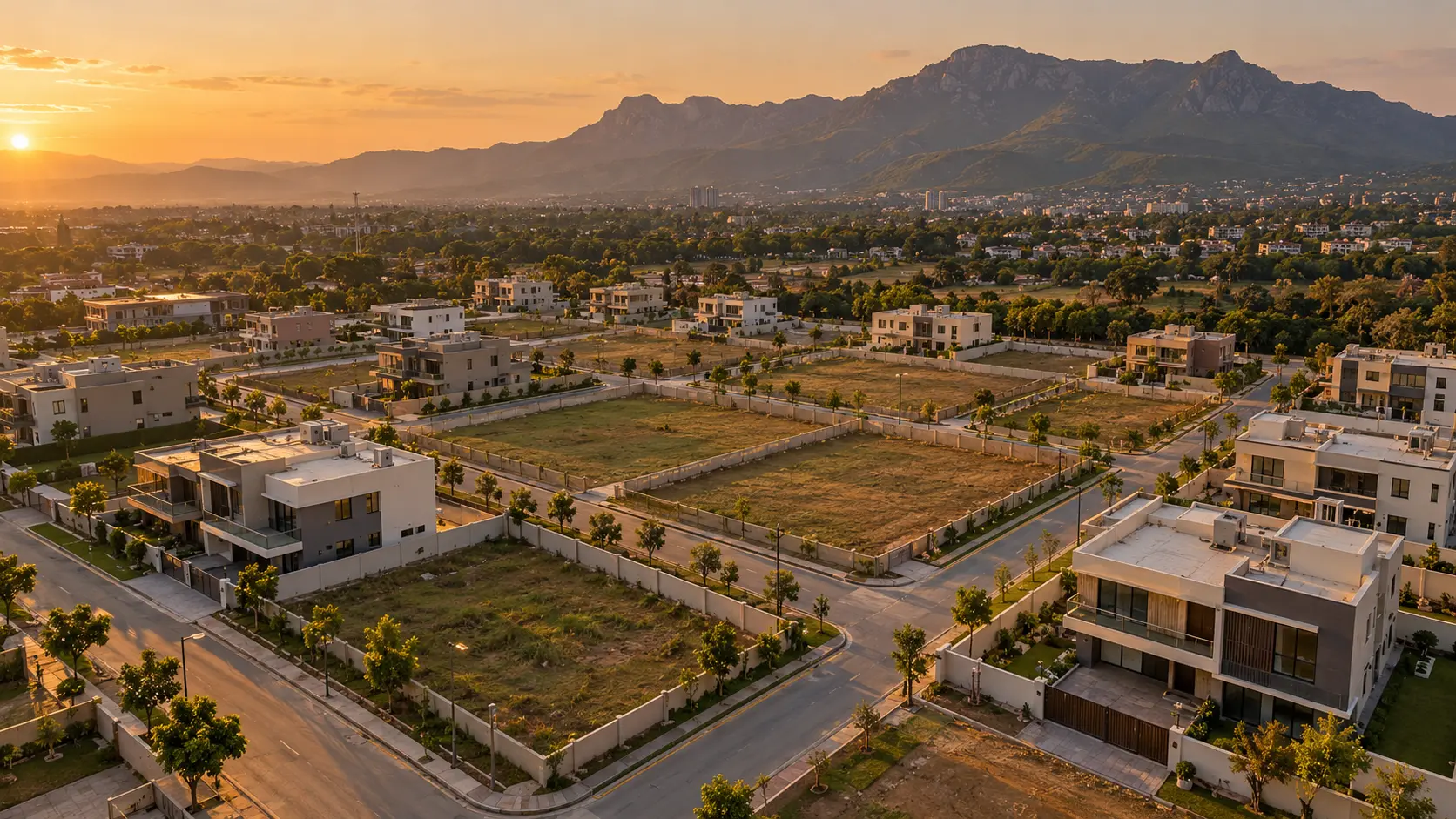
If you are trying to convert marla and kanal to square feet, the first answer is quick: under the standard measurement, 1 marla is 272.25 sq ft and 1 kanal is 5,445 sq ft. The second answer is the one that decides your budget: how much of that plot you may actually build on. At CUBE Design & Construction, a construction company working across Islamabad and Rawalpindi, we see homeowners lose weeks because they planned a house around plot area instead of permitted covered area. This guide gives you the conversion tables, the CDA and RDA coverage logic, and worked examples you can reuse.
Marla and Kanal to Square Feet: The Quick Answer
- 1 marla = 272.25 sq ft (standard, 1/160 of an acre)
- 1 marla = 225 sq ft (older convention still used in some schemes)
- 1 kanal = 20 marla = 5,445 sq ft (standard) or 4,500 sq ft (225 sq ft marla)
- 1 sq yard = 9 sq ft, so 1 marla is 30.25 sq yards under the standard measure
The kanal-to-marla ratio never changes. The size of the marla does, so always read the area printed on your allotment or transfer letter before you start designing. Wikipedia’s entry on the marla explains the history of the unit.
Why Two Marla Sizes Exist
The marla is a pre-partition unit that was never fully standardised. Government land records use 272.25 sq ft, while several private housing schemes plan plots around 225 sq ft. For example, DHA Islamabad-Rawalpindi’s regulations count a marla as 25 sq yards (225 sq ft).
A “5 marla” plot can therefore be 1,361 sq ft or 1,125 sq ft, a gap of roughly 21 percent. That difference flows straight into your permitted covered area, your grey structure quantity and your approval category. Ask your society office which convention applies to your plot before anything else.
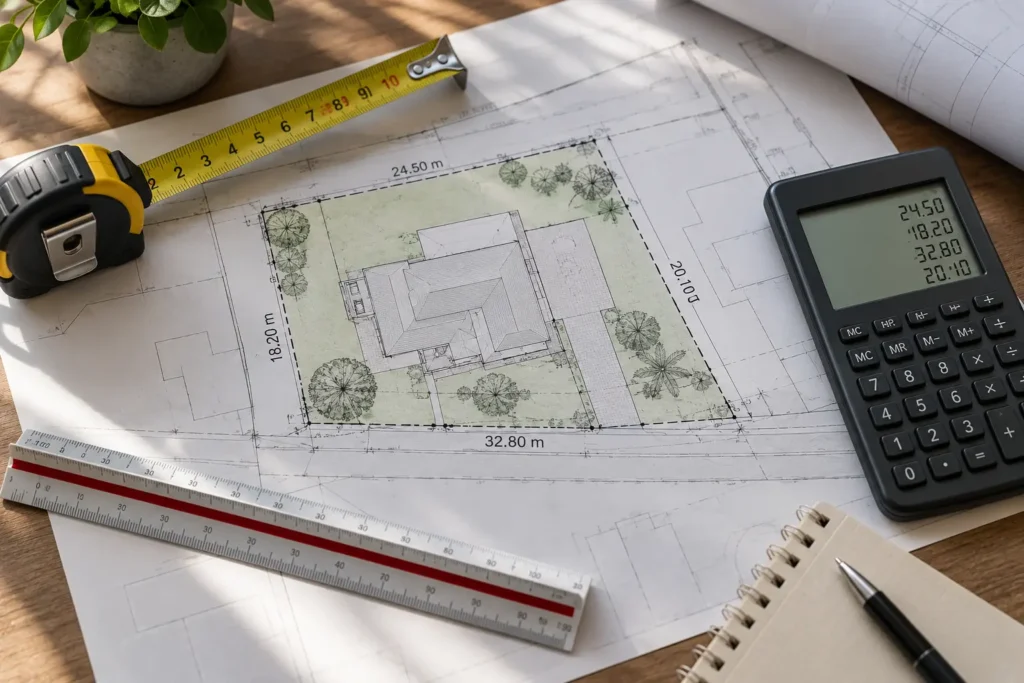
Marla to Square Feet Conversion Table
| Plot size | Standard (272.25 sq ft) | Older (225 sq ft) | Square yards (standard) |
|---|---|---|---|
| 3 Marla | 816.75 sq ft | 675 sq ft | 90.75 |
| 5 Marla | 1,361.25 sq ft | 1,125 sq ft | 151.25 |
| 7 Marla | 1,905.75 sq ft | 1,575 sq ft | 211.75 |
| 8 Marla | 2,178 sq ft | 1,800 sq ft | 242 |
| 10 Marla | 2,722.5 sq ft | 2,250 sq ft | 302.5 |
| 12 Marla | 3,267 sq ft | 2,700 sq ft | 363 |
Kanal to Square Feet Conversion Table
| Plot size | Marla | Standard sq ft | Older sq ft | Square yards (standard) |
|---|---|---|---|---|
| 1 Kanal | 20 | 5,445 | 4,500 | 605 |
| 2 Kanal | 40 | 10,890 | 9,000 | 1,210 |
| 4 Kanal | 80 | 21,780 | 18,000 | 2,420 |
| 8 Kanal (1 acre) | 160 | 43,560 | 36,000 | 4,840 |
Farmhouse buyers in areas like Chak Shahzad and Park Road usually think in kanals, so work in square feet from day one to compare plots honestly. Planning one? See our construction services for farmhouse and large-plot builds.
Plot Area vs Ground Coverage vs Covered Area
These three terms are often mixed up, and mixing them up is the most common budgeting error.
- Plot area is the land size on your documents. It never changes.
- Ground coverage is the share of the plot your ground floor may occupy, written as a percentage. Authorities cap this.
- Total covered area is every built floor added together: ground, first, mumty and, where permitted, basement. This is the figure your contractor prices.
A simple rule: ground floor footprint = plot area × permitted coverage, but setbacks (the open space you must leave at front, rear and sides) can shrink the usable footprint below that cap. Your real footprint is whichever limit bites first.
CDA Covered Area Rules in Islamabad
CDA approvals work under the ICT Building Control Regulations 2023, and categories are set by plot area in square yards, not by the marla label. That is why two “5 marla” plots with different documented areas can fall into different brackets.
The general pattern, based on commonly published summaries of the regulations, is consistent:
- Smaller plots (about 5 to 7 marla): highest coverage, roughly 75 to 85 percent, with small front and rear setbacks (around 5 ft) and little or no side setback.
- Mid-size plots (about 7 to 10 marla): coverage eases to roughly 70 to 75 percent, and a narrow side setback begins.
- 10 marla to 1 kanal: roughly 65 to 70 percent, with larger front and rear setbacks (around 10 ft and 7 ft) and a side setback on one side.
- 1 kanal and above: coverage falls further, and setbacks widen on both sides. Larger plots get stricter ratios to keep Islamabad’s green character.
Two cautions. First, published figures for height and permitted floors differ between sources (you will see 30 ft and 38 ft quoted), so confirm the exact numbers for your category on the official CDA website or with an approved architect. Second, housing societies such as DHA and Gulberg Greens publish their own bylaws that can override the general table, sometimes with much lower footprint limits.
Typical items that sit outside the headline percentage include the mumty (stair and water-tank block above the top floor), car porch limits and basement allowances. Each has its own cap, so ask for them separately.
RDA Covered Area Rules in Rawalpindi
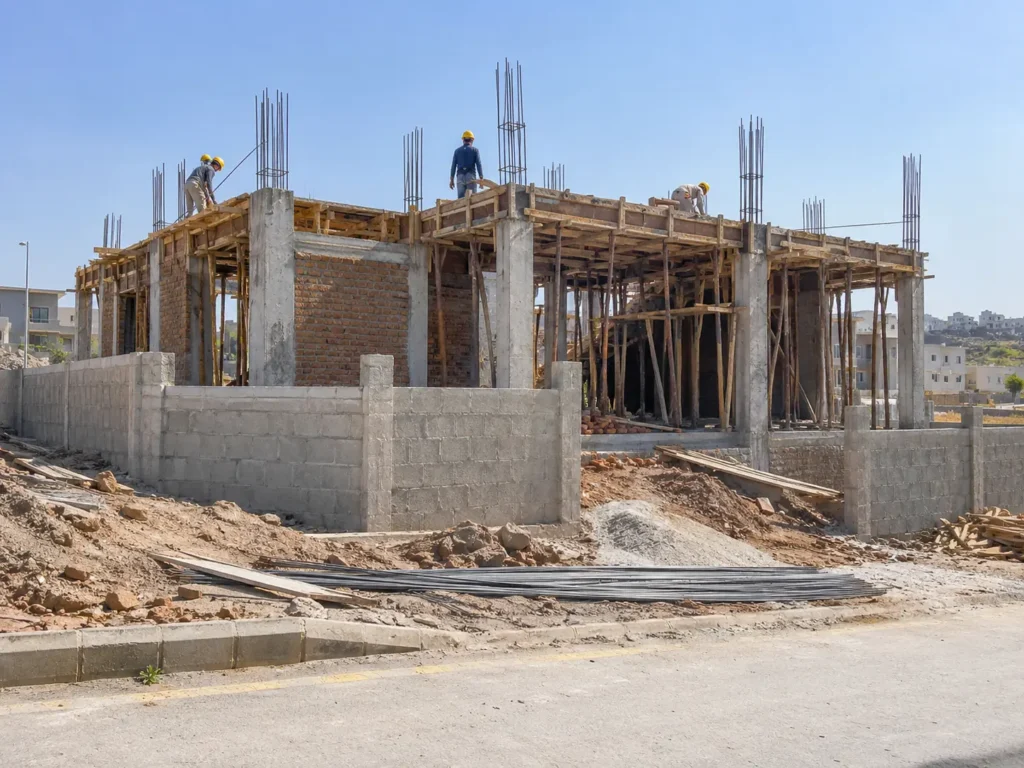
Rawalpindi plots are approved through the Rawalpindi Development Authority, and its published building and zoning framework follows a similar logic: coverage falls as plot size grows.
Commonly cited figures place smaller plots (up to about 8 marla) near 75 percent ground coverage, 10 marla near 70 percent, and 1 kanal around 65 to 70 percent. Setbacks grow with plot size in the same way as in Islamabad. Some RDA categories allow a third floor, which CDA’s standard residential categories generally do not, so do not assume Islamabad rules apply in Rawalpindi or the other way round.
In Bahria Town, DHA and other private schemes in Rawalpindi, the society’s approved layout and elevation controls apply on top of the authority rules. Our Rawalpindi team works from our Bahria Town Phase 8 office and our Islamabad team from CK Arcade, Sector G Enclave, so we handle both systems every week.
Worked Examples: 5 Marla, 10 Marla and 1 Kanal
These use the standard 272.25 sq ft marla and illustrative coverage percentages. Replace them with the figures from your approved category.
| Plot | Plot area | Assumed coverage | Ground floor | G + 1 (two floors) |
|---|---|---|---|---|
| 5 Marla | 1,361.25 sq ft | 80% | about 1,089 sq ft | about 2,178 sq ft |
| 10 Marla | 2,722.5 sq ft | 70% | about 1,906 sq ft | about 3,811 sq ft |
| 1 Kanal | 5,445 sq ft | 65% | about 3,539 sq ft | about 7,078 sq ft |
Add the mumty, and any permitted basement, on top. On a 1 kanal plot, the built-up area can approach or exceed 7,500 sq ft once everything is counted, which is far more than the 5,445 sq ft of land. That total, not the marla label, is what drives construction cost. Browse more construction guides for cost breakdowns by stage.
Mistakes That Cause Map Rejection
- Using the wrong marla size. Check the documented area first.
- Ignoring setbacks. A porch or bay window that intrudes into a mandatory open space triggers redesign.
- Planning an unapproved extra floor. Where only ground plus one plus mumty is permitted, a hidden third floor invites a stop-work notice.
- Skipping society rules. Society bylaws can be stricter than the authority’s.
- Copying a neighbour’s plan. Corner plots, plots with odd dimensions and different sectors fall under different conditions.
How CUBE Can Help
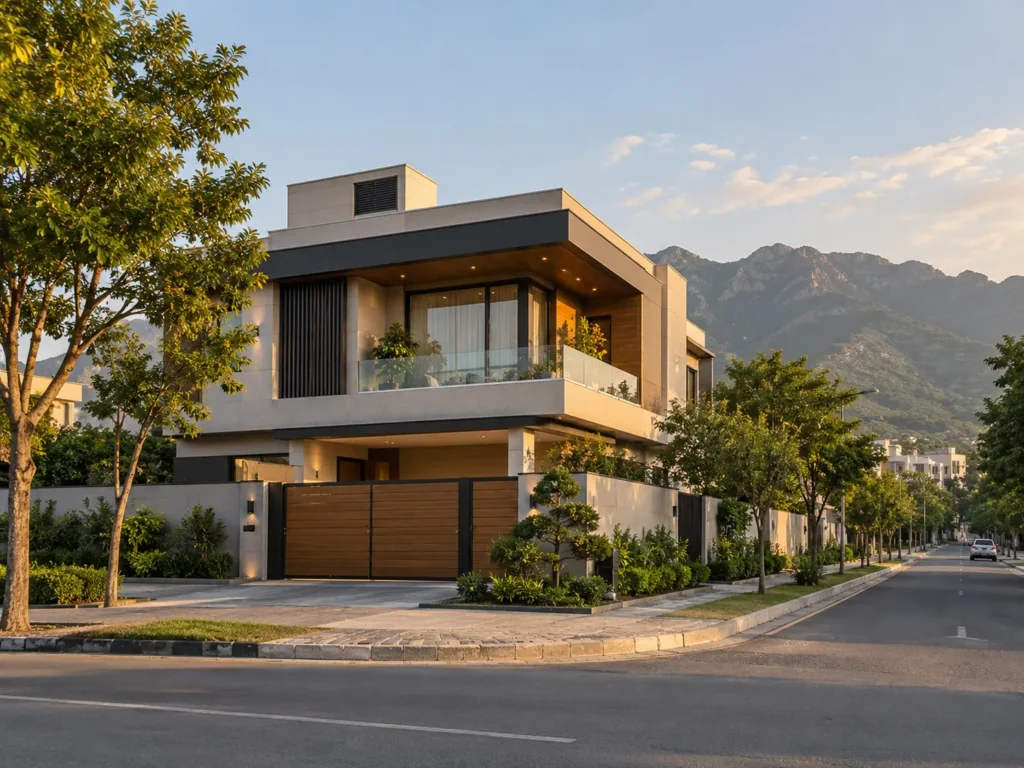
CUBE Design & Construction is a one-window construction company with 10+ years of experience, 200+ projects delivered and three office locations. Our process runs in six clear stages: Consultation, Planning, Design, Construction, Finishing and Handover. We check your plot’s documented area, category and society rules at the consultation stage, so the design is built around real covered area from the first sketch.
What you can expect: on-time delivery, a transparent process, a dedicated team, quality assurance and a single point of responsibility for architecture, construction, interior design, renovation and project management. See our experience and team or explore architecture and interior design services. You can also join our team if you work in construction or design.
FAQ
How many square feet is 1 marla?
Under the standard measurement, 1 marla is 272.25 square feet, equal to 30.25 square yards. Some housing schemes use an older 225 square foot marla instead. The difference is about 21 percent, so always confirm the area written on your allotment letter before calculating costs or covered area.
How many square feet is 1 kanal?
One kanal equals 20 marla. That is 5,445 square feet with the standard 272.25 sq ft marla, or 4,500 square feet where the 225 sq ft marla applies. It also equals 605 square yards or about 505 square metres under the standard measure.
What is the covered area of a 10 marla house?
Covered area is the total of all built floors. With a 2,722.5 sq ft plot and roughly 70 percent ground coverage, the ground floor can reach about 1,900 sq ft. Two floors give around 3,800 sq ft before the mumty. Actual limits depend on setbacks and your authority or society.
What is the difference between plot area and covered area?
Plot area is the size of your land. Covered area is the combined floor area you build on it. Authorities cap ground coverage as a percentage of plot area, so a house can have more covered area than the plot itself once several floors are added, within the permitted limits.
Do CDA and RDA covered area rules differ?
Yes. CDA assigns categories by plot area in square yards under the ICT Building Control Regulations 2023, while RDA works under its own building and zoning framework. Coverage bands look similar, but setbacks, floor allowances and basement rules differ, and societies like DHA and Bahria Town add their own controls.
Conclusion: Plan on Covered Area, Not Just Marla
Converting marla and kanal to square feet is step one. Understanding your permitted coverage, setbacks and floor limits is what protects your budget and your map approval. Rules and societies’ interpretations change, so confirm your exact numbers with the authority before you build.
Book a free consultation with CUBE Design & Construction. Our team responds within one business day.
- Phone: 0300 111 222 8
- Email: info@cubehomespk.com
- Office hours: Monday to Saturday, 10:00 AM to 7:00 PM
- Visit our office: Google Maps
- Get in touch online: book a free consultation
Follow CUBE: WhatsApp | Google Map Location